For years, I treated my scalp as an afterthought. As long as my hair looked clean and styled, I assumed everything was fine. Over time, though, I started noticing itchiness, flaky patches, and roots that felt greasy much faster than they used to. This made me refocus from just hair care to actual scalp care, and things started to change.
Scalp care is essentially skincare for your head. The scalp is skin, just like your face, but it tends to deal with more oil, more buildup, and far less intentional care. When the scalp is out of balance, such as being too dry, too congested, or irritated, it usually shows up in how your hair looks and feels.
Why Scalp Care Matters
The scalp is home to hair follicles and oil glands, which means it’s constantly producing oil while also collecting sweat, product residue, and dead skin cells. Even with regular shampooing, that buildup doesn’t always get fully removed, especially if you use dry shampoo or styling products.
Over time, this can lead to itchiness, flakes, dull-looking hair, roots that feel greasy shortly after washing, or hair that lacks volume and movement. In some cases, an unhealthy scalp can even contribute to increased shedding. Taking care of the scalp helps create a healthier environment for hair to grow and behave the way it should.
What Scalp Exfoliation Actually Does
Scalp exfoliation helps remove buildup that regular shampooing may leave behind. I think of it less as a step you need to do constantly and more as a reset when your scalp starts to feel off. When done occasionally and gently, exfoliation can help your scalp feel cleaner, and your hair feel lighter and easier to manage.
There are two main approaches to scalp exfoliation: physical exfoliants and chemical exfoliants. Which one makes sense depends on how your scalp behaves and how sensitive it is.
Physical Scalp Exfoliants
Physical exfoliants are scrubs that use fine particles to manually lift buildup from the scalp. These can be especially helpful if you use a lot of styling products or dry shampoo, or if your scalp tends to get oily quickly.
They work best as an occasional treatment rather than something you use every wash. Scrubbing too often, or too aggressively, can irritate the scalp and usually creates more problems than it solves.
Physical exfoliants to consider:
- Briogeo Scalp Revival Charcoal + Coconut Oil Micro-Exfoliating Shampoo – A good option if you want exfoliation built into your wash routine rather than an extra step.
- Christophe Robin Cleansing Purifying Scrub with Sea Salt – Much more of a deep reset; I see this as something to use occasionally rather than weekly.
Chemical Scalp Exfoliants
Chemical exfoliants rely on ingredients like acids or enzymes to dissolve buildup without physical scrubbing. I tend to reach for these when my scalp feels sensitive or when flaking seems to come from buildup rather than dryness.
They’re often easier to use consistently and can feel less disruptive to the scalp barrier when used correctly. Like physical exfoliants, they’re most effective when used thoughtfully rather than on a strict schedule.
Chemical exfoliants and treatments to consider:
- The Ordinary Glycolic Acid 7% Toning Solution – Not marketed for the scalp, but commonly used as a pre-wash treatment when applied carefully and sparingly.
- Living Proof Scalp Care Dry Scalp Treatment – A good option when your scalp feels tight or uncomfortable, especially in colder or drier months.
How Often Scalp Exfoliation Makes Sense
How often you exfoliate matters just as much as what you use. I’ve learned that overdoing it usually leads to irritation rather than improvement.
As a general guideline, oily scalps or heavy product users can exfoliate about once a week. Normal scalps tend to do well every ten to fourteen days, while dry or sensitive scalps usually need exfoliation less often, around every two to three weeks. Paying attention to how your scalp feels and adjusting accordingly works better than following rigid rules.
A Simple, Realistic Scalp Care Routine
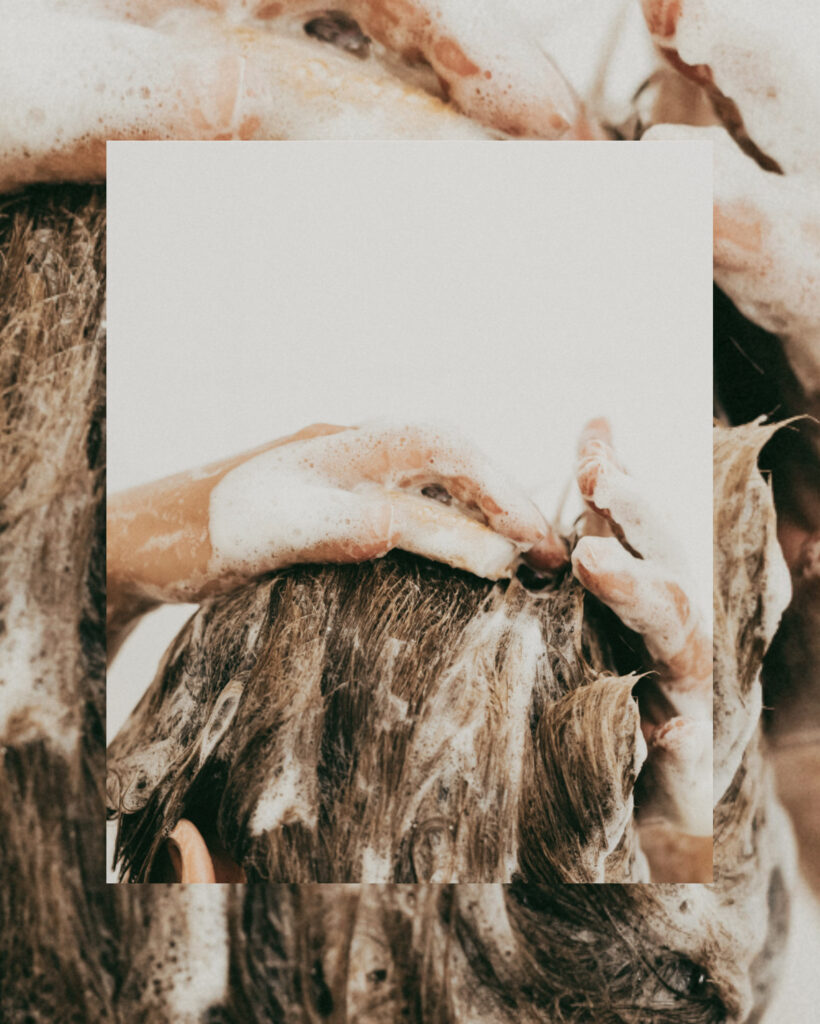
My scalp care routine is pretty simple. I’ve found that paying closer attention to how I wash my hair matters more than adding extra steps. When I shampoo, I focus the product on my scalp and massage gently using my fingertips rather than my nails. This helps loosen buildup and makes cleansing more effective, but it also slows me down and keeps me from being too aggressive. I pay extra attention to areas like the crown and hairline, where product and oil tend to accumulate most.
I exfoliate only when my scalp feels congested, itchy, or heavier than usual. Some weeks that means using a physical scrub, while other times a chemical exfoliant makes more sense, especially if my scalp feels sensitive. I try not to stick to a strict schedule and instead adjust based on how my scalp actually feels, since over-exfoliating usually does more harm than good.
Conditioner stays focused on my mid-lengths and ends unless I’m using a product designed specifically for the scalp. When my scalp feels tight or dry between washes, I reach for a lightweight scalp treatment rather than ignoring it or overwashing. Small adjustments like these have made my routine feel more intentional without becoming complicated, and over time they’ve made a noticeable difference in how my hair looks and behaves.
Scalp treatments worth trying:
- Ouai Scalp Serum – Lightweight and easy to use without making roots greasy.
- Vegamour GRO Scalp Serum – A good option if scalp health and hair thinning are both concerns.
Scalp Massage Tools
Scalp massage tools are optional, but they can be helpful if you like using a tool during shampoo or treatments. Used gently, they can help distribute product more evenly and encourage a more intentional cleanse. If you don’t enjoy tools, using your fingertips works just as well.
- Briogeo Scalp Revival Stimulating Therapy Massager
- Vegamour GRO Revitalizing Scalp Massager
- Sephora Collection Scalp Massager
Signs Your Scalp Might Need More Attention
If your hair gets oily very quickly after washing, flakes keep coming back, your scalp feels itchy or tight, or styling products stop working the way they used to, those are often signs of scalp imbalance rather than an issue with your hair itself. Noticing these signals and making small adjustments can make a noticeable difference over time.
Healthy hair really does start at the scalp. Treating it with the same care you give your skin—without overcomplicating things—can change how your hair looks, feels, and behaves. You don’t need a shelf full of products or an elaborate routine. Consistency, gentle care, and responding to what your scalp actually needs tend to work best.
Disclosure: If you buy something through my links, I may earn an affiliate commission at no cost to you. I only feature things I truly love here. Thanks for your support.